
MVP Development
MVP development services for startups and businesses that want to validate ideas quickly and reduce time to market. We build scalable, user-focused MVP products with modern technologies, rapid prototyping, and agile development processes. From concept validation to launch-ready applications, our team helps transform ideas into functional digital products that attract users, investors, and early business growth.
MVP (Minimum Viable Product) development is a strategic approach to launching a product with the minimum set of features required to solve a core problem and deliver real value to early users. Instead of investing significant time and resources into building a fully featured solution, companies focus on validating the product idea in the fastest and most cost-efficient way.
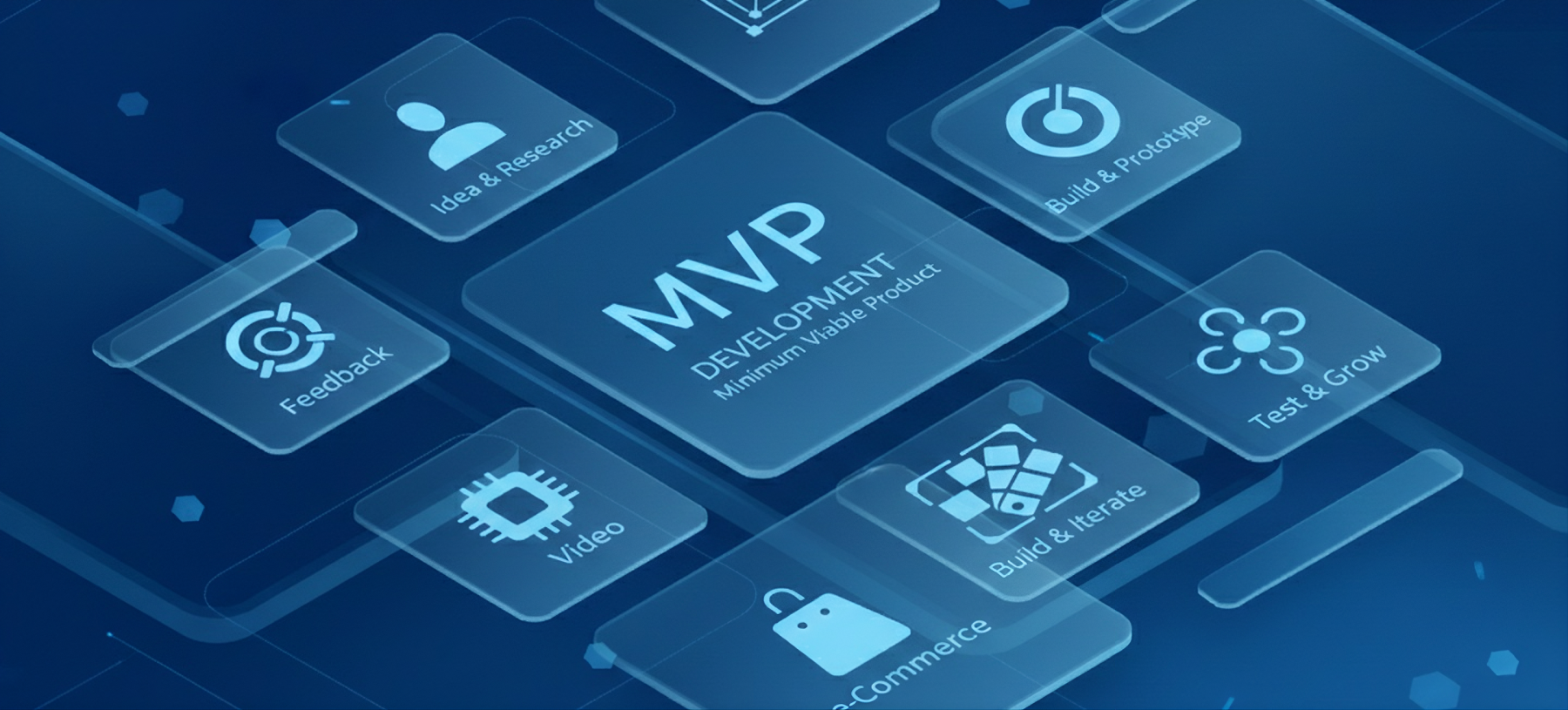
The MVP process begins with product discovery and market research. This includes identifying the target audience, defining the primary pain points, analyzing competitors, and clearly outlining the unique value proposition. Based on these insights, teams prioritize only the most essential features — those that directly address the core user need — while postponing secondary functionality for future iterations.
A well-structured MVP development cycle typically includes:
- Product strategy and roadmap planning
- UX/UI prototyping and wireframing
- Core feature development
- Basic analytics integration
- Initial quality assurance testing
- Launch and user feedback collection
One of the key advantages of MVP development is rapid validation. By releasing an early version to real users, businesses can measure engagement, collect behavioral data, and test assumptions. This data-driven approach significantly reduces the risk of building a product that the market does not need.
MVPs are also highly beneficial for startups seeking investment. Demonstrating a working product with active users and measurable traction provides stronger proof of concept to potential investors and stakeholders.
From a technical perspective, MVPs are built with scalability in mind. While the initial version is simplified, the architecture is designed to allow future expansion without major rework. This ensures smoother transitions from MVP to full product development.
Ultimately, MVP development accelerates time-to-market, optimizes budgets, minimizes risks, and creates a solid foundation for long-term growth. It transforms product ideas into validated solutions through continuous learning, iteration, and improvement.