
DevOps Services
DevOps services that help businesses automate infrastructure, accelerate deployments, and improve system reliability. We build scalable CI/CD pipelines, cloud infrastructure, containerized environments, and monitoring solutions to streamline development and operations. Our DevOps approach increases security, performance, and deployment speed while reducing downtime and operational costs for modern digital products.
DevOps services focus on uniting development and operations teams to deliver software faster, more reliably, and with higher quality. By combining automation, collaboration, and continuous processes, DevOps helps businesses accelerate product releases while maintaining system stability and performance.
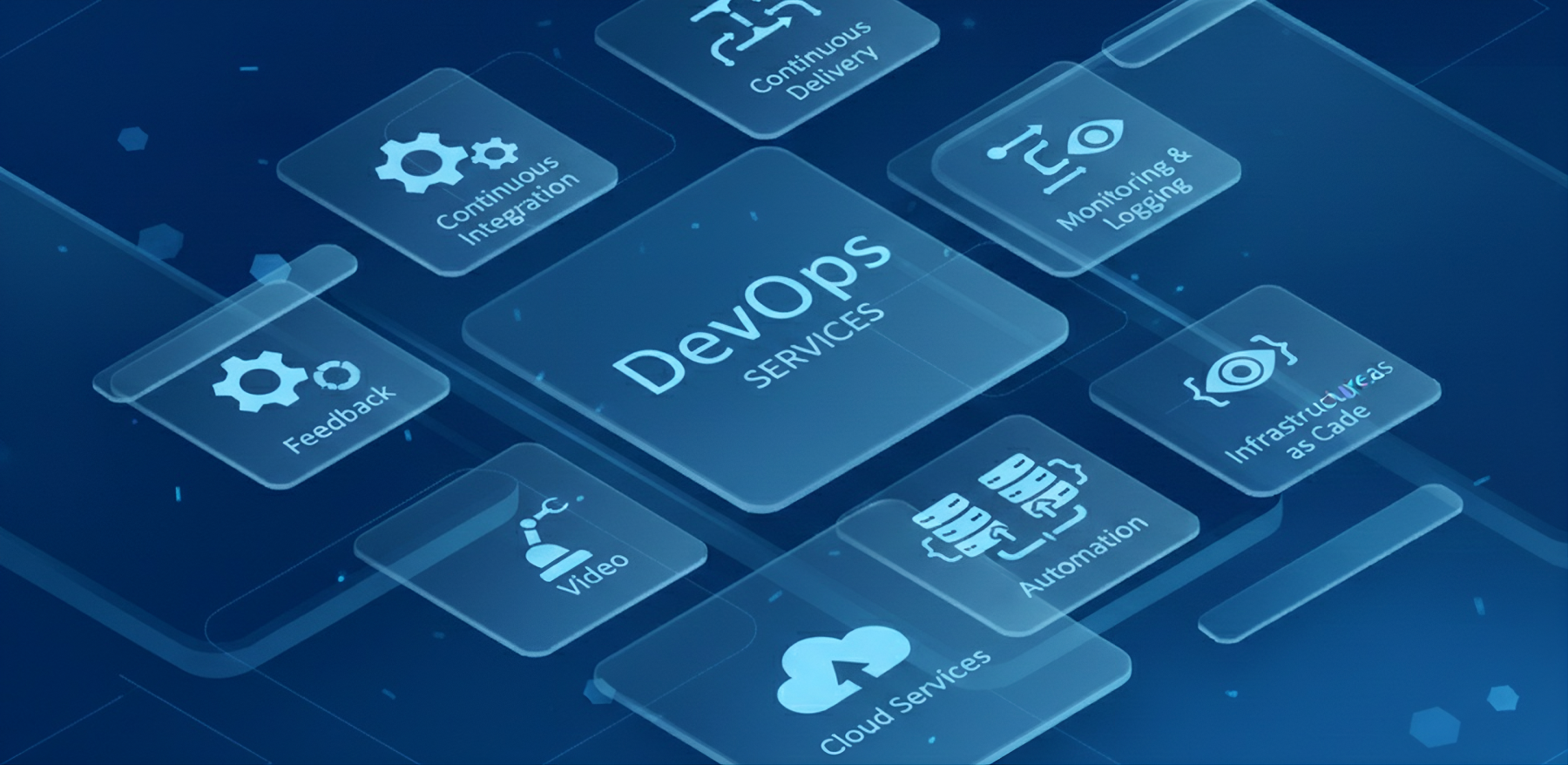
A core part of DevOps is building and managing CI/CD pipelines (Continuous Integration and Continuous Delivery). These pipelines automate code integration, testing, and deployment, reducing manual errors and speeding up release cycles. Infrastructure as Code (IaC) practices allow teams to manage servers and environments through code, ensuring consistency, scalability, and easier maintenance across development, staging, and production environments.
DevOps services also include cloud infrastructure management, containerization, and orchestration using tools like Docker and Kubernetes. This approach enables applications to scale dynamically based on traffic and business needs. Automated monitoring and logging systems provide real-time insights into system performance, allowing teams to detect and resolve issues before they impact users.
Security is another critical component, often integrated through DevSecOps practices. By embedding security checks into the development pipeline, vulnerabilities are identified early, reducing risks and ensuring compliance with industry standards.
Ultimately, DevOps services improve collaboration, increase deployment frequency, shorten development cycles, and enhance overall product reliability. By adopting DevOps principles, companies can innovate faster, respond quickly to market changes, and maintain a stable, high-performing digital infrastructure.
A well-structured DevOps strategy typically includes:
- CI/CD pipeline design and optimization
- Infrastructure automation and configuration management
- Cloud migration and environment optimization
- Container strategy implementation
- Performance monitoring and incident management
- DevSecOps integration
- Environment standardization and scaling support

Another important aspect of DevOps is reliability engineering. By implementing proactive monitoring, automated alerts, and incident response strategies, teams can ensure high system availability and minimize downtime. Performance tuning and resource optimization further enhance infrastructure efficiency while controlling operational costs.
DevOps also supports scalability and flexibility. As businesses grow, infrastructure and deployment processes must adapt to increasing workloads and evolving product requirements. Automated provisioning and orchestration allow organizations to expand seamlessly without disrupting user experience.
Through continuous feedback loops, analytics, and iterative improvements, DevOps becomes an ongoing process rather than a one-time implementation. This long-term approach ensures sustainable growth, operational resilience, and the ability to deliver high-quality digital products in a competitive market.